Jellicle Cats are black and white,
Jellicle Cats (as I said) are small;
If it happens to be a stormy night
They will practise a caper or two in the hall.
If it happens the sun is shining bright
You would say they had nothing to do at all:
They are resting and saving themselves to be right
For the Jellicle Moon and the Jellicle Ball.
(T.S Eliot, The Song of the Jellicles).
My Jellicle cat was called Lizzie: a black and white cat who came north to Crouch End from Rotherhithe, 16 years ago, when she was a tiny kitten. She had been advertised, along with her siblings, in the small ads of 'Loot': £5 apiece, although she turned out to be priceless. My oldest son was four years old, and his younger brother was still a baby. Jamie had longed for a cat, and I thought, why not? I liked the idea of another female in the house, so Lizzie arrived at six weeks old, and lived with us thereafter.
She was an independent creature: aloof at times, although she mellowed in old age, when she was happy to sit beside me on the sofa, occasionally bestowing a quick lick on my hand, purring and companionable, a witness to the changes in my life, apparently unruffled by seismic shifts or quakes, a reassuring presence and constant reminder that whatever else, breakfasts and dinners must be served.
In her prime, Lizzie ruled the feline neighbourhood: hence her unofficial title as Queen of the Black and White Club, stalking atop the highest brick walls and wooden fences. As such, she seemed to have more than nine lives: indeed, she survived several days inside the local electricity substation. (No one knew how she had managed to break in, nor her motives in doing so; but fortunately she was rescued by an employee of the Electricity Board, despite his self-confessed fear of cats.) Then there was the morning she disappeared beneath the floor boards, and the afternoon she climbed to the highest branch of a damson tree, and the night she appeared on the roof. But Lizzie always seemed able to find her way back to a saucer of milk in the kitchen...
She had a summer in the countryside, and many seasons in London; picking her way through hard winter frosts, sniffing the soft air of spring dawns, whiskers quivering, then dozing in the warm dusks of June. For a decade or so, she roamed a maze of back gardens, although was never a predator, more interested in sunbathing than killing, but occasionally swatted a fly.
In her latter years, she did not venture beyond her own garden, the walls suddenly grown too high for her; but looked happy enough to be there, especially in the sunlight with someone to stroke her (except when she flicked her tail as a warning, a reminder that there were times when she preferred solitude). Lizzie hated rain, abhorred puppies, and held her own against foxes, even when she was lame and deaf, her back arched with age rather than fury. Not long ago, she appeared to be sleeping as a cub sauntered past; but perhaps she had one eye open, and her claws were still sharp.
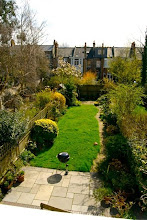
Her favourite spot was beneath the magnolia tree, where she retreated more often of late, sometimes breathing so quietly that it was barely perceptible, her black and white fur motionless. There she lay, curled up against the warm earth, enjoying her hiding place on the far side of the tree trunk, enclosed by a circle of lavenders, long after the magnolia petals had fallen to the ground.
As everyone knows who has shared family life with an animal, they gradually overtake us in age; and the days become years, quickening, before you have even noticed that they are gone.
I hope Lizzie is dancing at the Jellicle ball tonight, fleet-footed once more, whisking her way into the darkness, swift as a shadow towards the dawn.