Sunday, 29 April 2012

Mary Quant

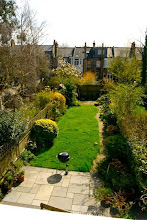
Here's the review of Mary Quant's autobiography that I wrote for the Guardian, or you can read it here, albeit without any paragraph marks (see below), due to unfathomable technological issues. (For some reason, whenever I click on the Guardian website, my computer also goes into a spin). It looks like her original memoir is going to be reissued by V&A publishing later this year, so I look forward to reading that, as well. I don't remember my mother wearing any Mary Quant -- she was more of a Biba fan -- but I did find a wonderful second-hand black and white Quant check mini-dress when I was a student, which I wore as often as possible, until it fell apart. It's one of those pieces that perhaps I should have kept for posterity, but at least I had fun in that dress, cycling around Cambridge, whatever the weather. Speaking of which, I have never seen my garden so wet as this week; the lawn has turned into marshland, and the borders are overflowing with rainwater. Good for the plants, given that we're in a drought, but I'm longing for some sunshine. Feeling a bit gloomy at the prospect of an equally rainy May (is it just me that feels sleepy after days and days of grey skies?), which is apparently what we're forecast, but I suppose the trees will be thankful... PS: a query to anyone else who uses blogger. There seems to have been an 'upgrade', but it strips away the paragraphs when you post, even though they appear to be there in preview. Any advice?
Memo to self: consult great blogger in the sky...


The autobiographies of fashion designers have a tendency to cover up as much as they reveal, which might be an artful indication of their craft, albeit frustrating for the reader. Coco Chanel embarked on several failed attempts with ghost writers, and then decided against all of them; Christian Dior produced a tantalizingly opaque account of his life, with little in the way of personal detail; while Elsa Schiaparelli was as creative in reinventing her past as she was with her surrealist costumes, leaving the briefest of memoirs behind her.
   So it is with Mary Quant’s autobiography, which skims through her life with almost as much brevity as the miniskirts that made her famous. The book itself is a solid looking object – too solid, perhaps, for such a stylish subject, with cheap-feeling paper and a paucity of pictures – but the words skitter about all over the place, in truncated chapters and an eccentric narrative that incorporates lists but avoids linear convention. Quant’s account of how she found herself at the centre of the Swinging Sixties, as a designer and icon of the era, is impressionistic, and sometimes sketchy. Her itinerant wartime childhood is dealt with in less than six pages, skipping over her parents, who met at Cardiff University as ‘the prize pupils of their vintage’, thereafter becoming teachers, like Quant’s Welsh maternal grandparents. There is an occasional clue about the source of her fashion inspirations; in a school history exam on the Roundheads and Cavaliers, she declares herself to be on the side of the latter, based on their ‘accessories, hair styles, hats, make-up, toiletries...’ And she spies the ‘vision of chic’ at a childhood dancing class, who will form the basis for her future designs: ‘A girl with bobbed hair, wearing a black skinny-rib sweater, seven inches of black pleated skirt, black tights under white ankle socks, and black patent shoes…’
   It is this girl, an eight or nine year old, that Quant takes as her model for the Sixties dolly bird; child-like, with white socks exposing colt legs, a Lolita apparently liberated by the Pill. Not that Quant herself is immune to the inconsistencies of the sexual revolution; everyone adores her, but her beloved husband and business partner, the upper-class hipster Alexander Plunket Greene (‘a 6’2” prototype for Mick Jagger and Paul McCartney rolled into one’) is as unfaithful as his father had been in a previous generation. ‘Alexander was a hell of a womaniser, like his father, and that makes life bumpy,’ she admits, in a rare moment of emotional candour, before blaming herself in a manner almost untouched by notions of feminism. ‘I was working so hard and obsessed with design, so I knew it was partly my fault. Women would telephone me and say, “Can Alexander come out to play today?” And I would find little presents for him left in the car. The trouble was he was such fun to be with until he became too ill, and by then one cannot do anything about it.’ Her husband’s illness and death at the age of 57 is not referred to again until close to the end of the book, with a cryptic reference to alcohol: ‘He said he could not live without wine and vodka anyway.’ Other than that, ‘he just petered out… I can’t bear to write more about Alexander’s exit as I will never get over it.’
   Curiously, Quant’s descriptions of the Sixties also verge on the hazy – inevitably, perhaps, because of the whirlwind that spun around her – with repetition taking place of recollection. (‘Everything was changing. Chelsea was changing… Change, change, change.’) Names are dropped, as visitors swing down the King’s Road from the Royal Court Theatre to her boutique, although without much more in the way of context or analysis: ‘John Osborne, Claire Bloom, Susannah York, Audrey Hepburn, Brigitte Bardot, Leslie Caron and, later, pop artists and musicians like the Beatles and the Stones, photographers David Bailey and Richard Avedon, film directors Stanley Kubrick and Joe Losey, and models like Jean Shrimpton and Twiggy. Why it caused such heated attention from the start is hard to understand…’
   When she does write in more detail, it is with considerable panache, as with her evocation of an earlier post-war youth, when rationing still prevailed: ‘London was a bombsite and the only thing that thrived was the buddleia… If you went out to tea you took your own private plate of rancid butter and kept a sharp eye on it… Fog permeated everything. Fog was a smell. Fog was a colour.’ In the aftermath of this austerity, a new decade explodes into colour, but not always with the clarity or vividness in Quant’s memoir that you might expect.
   Nevertheless, this is a story to be cherished (indeed, one wishes that the publishers could have lavished it with more care). Quant’s understanding of the language of fashion is as astute as the way in which she shaped traditional gentlemen’s tailoring, pinstripe City suiting and herringbone tweeds into the clothes that she and her friends wanted to wear. In this, she had something in common with her predecessor Coco Chanel – that sharp sense of how to turn masculine classics into androgynous style with a feminine twist – and like Chanel, Quant built a global brand out of herself. Whether this can survive with anything like the same success remains uncertain (she resigned as a director 12 years ago from the company that bears her name, after a Japanese buyout). But the hidden history of Mary Quant will continue to be every bit as intriguing as before.

Thursday, 19 April 2012

Semana Santa in Andalusia


I'd never before seen Holy Week celebrations in Spain, until this year, for an Easter weekend near Ronda, and it was the most extraordinary sight; somehow more foreign than anything else I've witnessed in Western Europe. The penitents, hidden behind their hoods and cloaks, and the cavalcade of processions, where the figures of Christ and the Virgin Mary are carried aloft, and the little children, in robes or mantilla lace... it was beautiful and sinister, glorious and strange, not staged for tourists, but entirely by and for the local people. I wished that Daphne du Maurier could have written about such a scene -- doubtless she would have added a twist to the tale -- but I wonder if Lorca wrote a poem about Semana Santa? There was a full moon rising over Ronda on Good Friday, and I remembered a fragment of Lorca:
'Through the sky goes the moon,
gripping a child's fingers...'

Tuesday, 3 April 2012

Finding Alice


Very much enjoyed a nostalgic weekend back in Oxford, and meeting a wonderfully responsive audience at the Sunday Times Literary Festival. The only disappointment was that the bookshop ran out of copies of Chanel (apologies to all those who queued, only to be turned away; it was as frustrating for me as it was for those who had been kept waiting).
Calm was restored when I found the secret door to Alice's garden (see above; needless to say, it remained locked) and the portrait of Lewis Carroll/ Charles Dodgson in the Christ Church Great Hall (now world-famous as Hogwarts, but hugely impressive for its own extraordinary academic, literary and political history). Time for tea afterwards at the Randolph hotel, and a chance to admire Osbert Lancaster's illustrations for Max Beerbohm's novel 'Zuleika Dobson'. (Not my favourite Oxford novel -- Brideshead Revisited can never be bettered -- but Zuleika, for all the damage she wreaks, deserves some celebration, as the femme fatale approaches the age of 101).
From the Randolph, back to Christ Church to hear Andrew Marr's talk on The Diamond Queen (as entertaining as his television series on the subject), and then a fortuitous meeting at dinner with Bettany Hughes, who told me about her new documentary on the hidden history of women and religion (apparently there were female bishops in the early Christian Church, and a deaconess named Phoebe, mentioned only briefly in the Bible, but intriguing nevertheless).
Alice, Zuleika, goddesses, and the Queen; what more could one ask for? All that was missing was a chance to dance the Lobster Quadrille, but walking across Tom Quad at midnight was almost as magical...

Wednesday, 28 March 2012

Oxford Literary Festival


I'm talking at the Sunday Times Oxford Literary Festival at Christ Church on Saturday (March 31st, 12 noon; very much hoping that some blog readers might be coming).
Oxford is where I spent some of my childhood -- mostly very happy years, though also shadowed with several darker episodes, when my father's mental health was at its most fragile -- and Christ Church is a place that I associate with Lewis Carroll and Alice in Wonderland. It was here, my father told me, that Carroll -- or rather, Charles Dodgson, a mathematics don at the college -- had written his stories of Alice; and so when I went there with my sister, to the gardens and meadow, I half-imagined that we might glimpse the White Rabbit disappearing through a little gate, or even Alice herself, slipping just out of sight. My father was an academic at a different college, so Christ Church felt like foreign territory, which made it more magical, but I do also think of it as as a locked doorway into a past that contained moments of madness and incoherence, as well as joy. Like Lewis Carroll, my father loved riddles and clues and codes, but was also troubled by them, when his mind was at its most tormented.
As a child, I was as disturbed by the Alice stories as I was intrigued by them; their unsettling strangeness more frightening than the Narnia books that comforted me. Wonderland is a dangerous place to visit -- the pool of tears in which Alice nearly drowns, the ferocious Queen, the lunacy of the Mad Hatter's Tea Party -- but I look forward to returning to Oxford, and searching again for that elusive door into a forbidden garden...

Saturday, 17 March 2012

The Snow Queen


I've been writing, and re-writing, and discarding the threads of a near-impossible book. It's so damn hard -- to try to address something deeply personal, in the almost certain knowledge that exposure to the outside world might shrivel it up and turn it to ashes. I say 'it', as shorthand for the unsay-able -- in other words, the attempt to tell a story that begins with the end of a marriage, without being hurtful or damaging to anyone involved. Has anyone else read Rachel Cusk's 'Aftermath'? I did, a couple of weeks ago, and admire her courage in addressing a subject that seems to create such powerfully judgmental reactions (she initiated the separation from her husband). The reviews have veered to extremes; critics love it or hate it -- usually the sign of an interesting book, and Aftermath is vividly spiky, demanding, jagged, visceral -- but the online response is terrifying (volcanic acid spewing out of the internet). Needless to say, this has made me horribly uncertain about the idea of writing anything personal, which is perhaps an appropriate response.
I'm not sure why, but the anxiety sent me back to Hans Christian Andersen, to re-read The Snow Queen. What a strange, unsettling series of episodes make up the narrative -- so much more complicated than its modern interpretations tend to be. There's something profoundly compelling about the opening -- a devil-made mirror that reflects and refracts uncertainty, showing the worst of all worlds, and then smashes to pieces, the tiny fragments lodging themselves into the eyes and hearts of those thereafter doomed to see only the dark side... (Andersen himself being a writer more often drawn to the shadows than the light).
It cannot be coincidental that the Snow Queen was elemental in Daphne Du Maurier's writing, an archetype that seemed also to be summoned into her life (by the writer herself, as a character that sometimes blended into her mother, or her husband's lover -- the threatening Other Woman, too powerful to resist); so yes, I confess, I've been thinking about 'Daphne' again, and the process of reading and writing, and how to see clearly, without a shard of broken mirror in my eye.
Does any of this make a modicum of sense? Not to me, not yet, not clearly... but I'll keep trying.
Upon reflection (ten minutes later)... perhaps looking at the fragments of a broken mirror is inevitable, in the aftermath -- examining them, putting them down again, sweeping them out of sight, too sharp to touch, too dangerous to handle. And trying to reassemble them into some kind of order is as doomed a puzzle as the one attempted by the boy in The Snow Queen. Still, he was obsessed with numerical and logical processes -- while I'm more intrigued by intuition, however elusive, and the thoughts that lie just beyond our grasp.

Sunday, 4 March 2012

The Closet Thinker: Au Revoir


This is my last Closet Thinker for Stella, but not a goodbye to closet thinking. Perhaps it wasn't entirely coincidental that my sturdy old MacBook Pro finally gave up the ghost yesterday, and after three hours at the Genius Bar at the Apple Store in Brent Cross, I came away with my date retrieved, and a new laptop. I thought I'd be bereft to say goodbye to the old computer (it's seen me through the roller coaster of three books, thousands of articles, and a zillion emails and blogs) -- and actually, it's come home with me, for a safe retirement -- but the new one is thrilling, too.

Closet Thinker: March 4th
Ever since I started writing this column for Stella, over six years ago, I’ve been reminded each week of the way in which clothes are threaded through the stories of our lives; what we wear providing clues to who we are, where we came from, and how our futures might unfold. Fashion is a transient element -- an observation not intended as a dismissal, given that the intriguing vicissitudes of style can be a reflection of cultural shifts. But some material rises above fashion, whether christening gown or widow’s mourning. Just think of the shoes in which you walked towards independence; the suit that carried you into a different job; the jeans that reminded you that freedom is not only for the young.

And so it is that I find myself considering a wedding dress, after finding love the second time around; a symbol of how beginnings can arise out of endings, and alternative narratives unfold, even when a chapter of your life has come to a close. I still have my first wedding dress (white linen, from Nicole Farhi, worn when I was a slip of a girl; oddly undamaged, despite the onslaught of moths and time); but now I have the unexpected pleasure of finding a different dress, and joyous summer celebrations to come.

What should the grownup bride wear, when a white meringue is entirely inappropriate? Wallis Simpson provided a certain kind of chic template in June 1937, the divorcee in Mainbocher’s buttoned-up blue silk couture; reinterpreted with panache by Stella McCartney for her father’s new wife, Nancy Shevell, last October (in white, and shorter than the Duchess of Windsor’s full length gown; but with a similarly nipped in waist and long sleeves).

Given my immersion in the Chanel archives, having written a biography of Coco Chanel, I cannot help but be inspired by her iconic designs from the Twenties and Thirties; and doubtless my own passionate attachment to these was inspired by my mother’s choice of a Chanel-like little black dress for her wedding in 1960. Ideally, I’ll find an outfit that has a life beyond its ceremonial first outing (I’ve worn my mother’s wedding dress to countless parties), as well as suggesting tangible links with the past (something old, something new, something borrowed, something blue?). As yet, the details remain unclear; for in fashion, as in life, certainty can be elusive; which is no reason to fear the unknown. This is my last column as the Closet Thinker, but not altogether a farewell. Here’s to the future, and all that it may hold…

Wednesday, 29 February 2012

March 1st: The Faber Social at Selfridges

I'll be there tomorrow at 7pm, with Linda Grant, Ali Smith and Alex Clark. Thrilled to be included in such a wonderful lineup.
Meanwhile, apologies for silence -- I've been wrestling with what I hope is my new book, goimg up, down, and all around; finally, in the last couple of days, it feels closer to being right, but I don't want to tempt fate by saying so.
Anyway, here we are on the last day of February -- an extra day, which is a blessing, perhaps, though I am longing for winter to fully retreat (but never wish away days, I know; they are too precious for that). I've had the same hacking cough and sore throat as most of the rest of London, but lucky to have an afternoon with my mother at the Royal Academy's Hockney exhibition, which was glorious, despite the crowds. She was (and is) a very wise guide; and Hockney's landscapes are vivid reminders, amongst other things, of the particular joys of each of the four seasons. I hope that doesn't sound horribly Pollyanna-ish, to anyone who is gripped by the mean reds or wintry blues (I've been there myself), but the London sky was beautiful at six o'clock this evening, when darkness had not yet fallen. Tomorrow, will it be spring?